Graffiti on your building: what to do first
The first few hours matter: what you do and don't do to a tagged wall decides how clean it can get.
October 19, 2026 · 4 min read
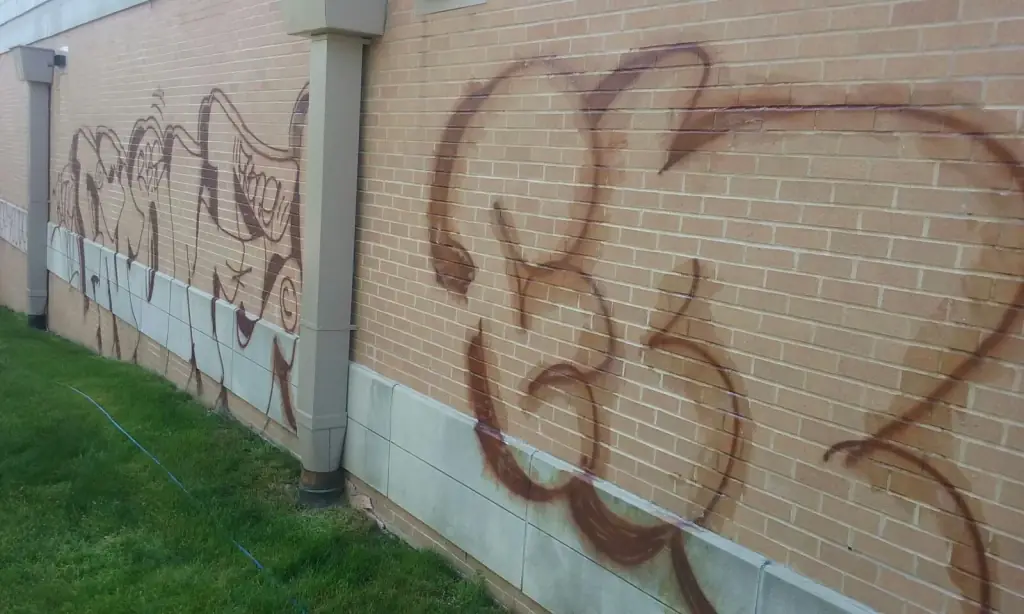
You open up in the morning, or look out the window, and there it is: a fresh tag across the brick, the roll-down gate, the side of the loading bay. It's annoying, and for a business it feels personal. The instinct is to grab something from under the sink and start scrubbing right away. Resist that. What you do in the first day has a real effect on how completely the mark can be removed and how the surface looks afterward. Here's a sensible order of operations for storefront owners, building managers and homeowners.
Step one: photograph it before anything else
Take clear photos of the whole wall and close-ups of the marks, with something in the frame that shows where on the building it is. Note the date and time you found it. If you need to report it, file an insurance claim, or tell your landlord, co-op board or managing agent, those pictures are your record. They also help a removal crew understand the surface and the type of paint or marker before they arrive.
If graffiti keeps coming back to the same spot, a dated set of photos is even more useful, because it shows a pattern. Keep them in one folder and share them with whoever needs to see them. If you manage several properties, label each set with the address so nothing gets mixed up when the pictures are passed along to a landlord, an insurer or a removal crew.
Step two: don't scrub it with whatever's handy
Household solvents, paint thinners and harsh cleaners can make things worse. On porous brick, stone, concrete and unsealed wood, a solvent can carry the paint pigment deeper into the surface or spread it into a larger, fainter stain. A wire brush can scour away the face of soft brick or leave scratches in metal and painted surfaces. A hard jet from a borrowed machine can do its own damage to mortar joints.
Leave the surface as you found it, and don't paint over it as a quick fix if you can avoid it. Painting over a tag hides it for a while, but the mismatch is obvious, and it can make later removal harder. A patch of fresh paint on a weathered brick wall tends to draw the eye. The same goes for a roll-down gate: a rushed coat of paint over a tag usually peels, and then you have two problems to fix instead of one.
Step three: act quickly, because time works against you
Spray paint and marker are easiest to remove while they're fresh. Over weeks and months, paint can cure and settle into the pores of the material, and sun and weather can bond it tighter. That doesn't mean old graffiti can't come off, but earlier removal usually means a gentler method and a cleaner result. It also matters for deterrence: a tag that stays up tends to invite more of them, while a quick clean sends a different message.
How professional removal works
A good graffiti removal crew starts by identifying the surface and the paint. Smooth painted metal, rough brick, limestone and a glass storefront each call for a different approach. Power Washing NYC provides graffiti removal as part of its commercial service, working with steam, hot and cold water and environmentally friendly pre-treat detergents chosen to suit the surface.
The aim is to lift the paint without lifting the building with it. That means the mildest method that works, pressure matched to the material, and a test patch before the whole wall. On a delicate surface, lower pressure and patience beat brute force every time. Surrounding areas get protected, and the crew keeps an eye on where the rinse water goes, with water reclamation available when runoff is a concern.
Think about the whole wall, not only the tag
One common surprise is the cleaned patch that looks too clean. Brick that has weathered for years carries a film of city grime, and a spot-clean can leave a bright rectangle that stands out almost as much as the graffiti did. The fix is often to wash the surrounding wall or the full elevation so the finish blends. It's worth raising that with your contractor early, so nobody is surprised.
Some owners also look at protective coatings once the wall is clean, which can make future removal easier. Ask your crew whether that makes sense for your surface and exposure. Not every material needs one, and a straight answer beats a sales pitch.
If you're dealing with graffiti on a storefront, a facade or a boundary wall, call Power Washing NYC at (917) 671-9500 for a free quote. The crew serves Manhattan, Brooklyn, Queens, the Bronx, Staten Island, Westchester and Long Island.
Power Washing NYC, (917) 671-9500
Call (917) 671-9500More articles
Reasons to hire a professional pressure washing company
A rented machine looks like the cheap shortcut, but the city's brick, stone and old mortar punish a heavy hand.
What to look for in a pressure washing service near you
Anyone can buy a machine and print a flyer, so here is how to tell a real crew from a risky one before the hose comes out.