Three masonry types, three different ways to get hurt
Brownstone is a soft sandstone. On a Brooklyn or Harlem stoop it can look solid and still pit, flake and shed its face when it meets the wrong pressure. Once the skin is gone, the stone behind it weathers faster and does not grow back.
Limestone stains where water runs over it, and soot and pollution settle into its fine pores. Brick has its own trouble: white efflorescence, the salt that migrates out of the wall as moisture dries, along with mildew in shaded courses and old paint in the mortar joints.
A wash that suits hard brick can ruin a brownstone, which is the whole reason this work cannot be done at one setting.
Test patch, soft wash, then the stone gets what it needs
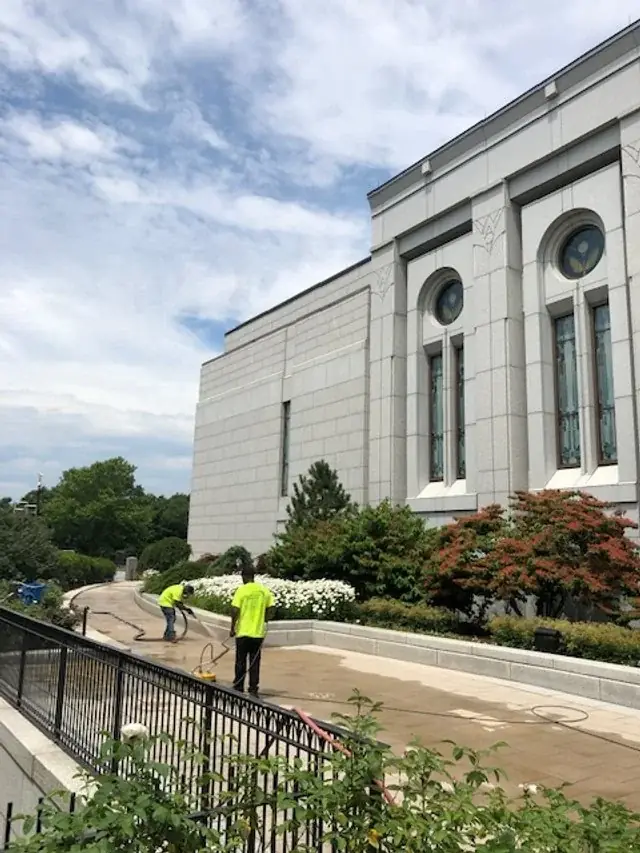
Every job starts with identifying the material and testing a small, out-of-the-way patch. How the surface responds sets the method: soft wash or low pressure for brownstone and weathered limestone, a firmer approach for sound, hard brick.
The crew pre-treats with environmentally friendly products and detergents chosen for the stone, lets them dwell, and rinses with the water temperature the surface suits. Efflorescence, biological growth and soot each get their own treatment rather than one blanket pass.
Restoration is a separate step from cleaning. Where mortar has washed out or a face has spalled, the crew will tell you plainly what is cleaning and what is repair. Call (917) 671-9500 and describe the building or send a photo of the stoop.
What to watch on stoops, fronts and shaded courses
Stoops take the most abuse: foot traffic, salt, water pooling at the treads. Check them for fresh flaking, crumbling edges and open joints, because those are the early signs that cleaning should be followed by repair.
Limestone fronts streak again below ledges and cornices, and brick on the north side of a block greens up first. Cleaning on a regular cycle takes less out of the stone than letting growth and staining build for years.
Skipped for too long, soiling holds moisture against the face, and a cleaning job becomes a restoration job. If you are not sure which one you need, ask for a free quote through the contact page and the crew will look at the stone and say.