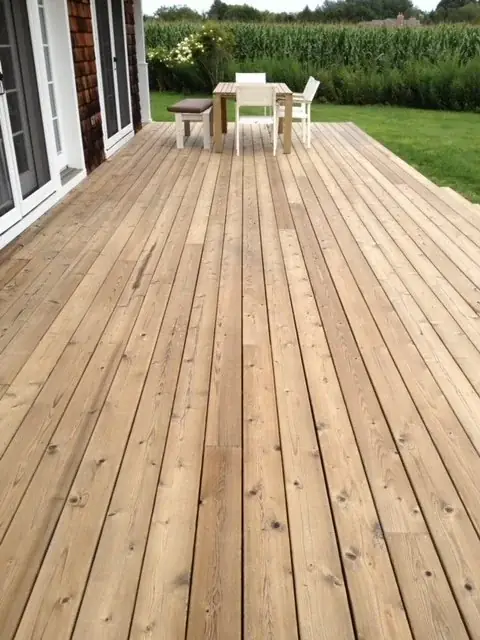
Why a cedar deck goes grey and a patio goes slick
Wood that lives outside weathers in a predictable order. The surface oxidises to silver grey, mildew settles into the grain where the board stays damp, and the boards that sit under a tree or beside a planter go dark first. A deck that was honey-coloured a few seasons ago is usually not rotten. It is wearing a layer of grey and growth that can be washed off.
Patios fail differently. Algae and mildew build up on shaded stone and pavers until the surface turns slick underfoot, and a wet patio becomes a fall waiting to happen. Fences collect the same green film along the bottom rail and on the north face, where the sun never dries them.
Left alone, all three trap moisture against the material, and that is what moves a cosmetic problem toward a structural one.
Matching the pressure to the board, the stone and the rail
The list on the residential side reads Deck Cleaning, Patio Cleaning, and Fence Cleaning, and each one asks for a different hand. Wood is soft. Turned up too high, a jet gouges the grain and raises fuzz that holds dirt and takes stain unevenly, so decks and fences are washed at a pressure the board can take, with the cleaning solution doing the lifting and the water carrying it off.
Patio stone and pavers can take more, but not the same amount everywhere. Joint sand washes out if the jet is dragged along it, so the crew works the surface in even passes and watches the joints. Environmentally friendly cleaning products are used to pre-treat first, and where the wood is badly greyed the work leans on the solution rather than force.
Whether it is a brownstone back garden in Brooklyn, a rooftop deck in Manhattan or a fenced yard in Westchester or on Long Island, the approach starts with the material and works up to the pressure, never the other way around.
Dry first, then seal or stain, then wash it every year
A freshly cleaned deck or fence needs to dry before anything goes on it. Sealer or stain applied over damp wood traps moisture and peels early, so give the boards a good dry spell rather than rushing to coat them. If the wood is going to be sealed or stained, that is the moment: open grain, clean surface, nothing in the way.
A yearly wash keeps the job small. Mildew caught while it is still a light film comes off easily and never gets the chance to stain the wood. Patios and pavers benefit from the same rhythm, and a sealed paver surface holds its colour longer between washes.
To get a deck, patio or fence on the schedule, send the address and a photo through the contact page or call (917) 671-9500. Quotes are free, residential and commercial, anywhere in the five boroughs, Westchester or Long Island.